
We Have The Best Solutions for Your Business
2013 Establish
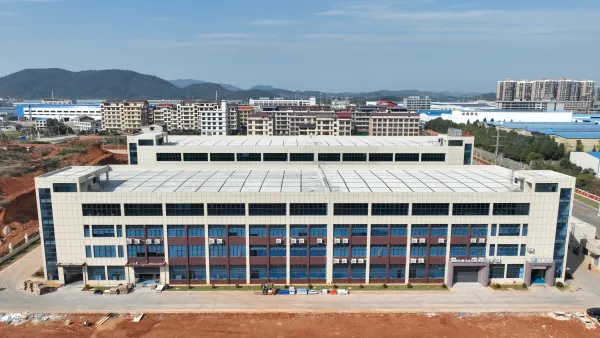
Founded in 2013, grown from Shenzhen's Huaqiangbei and Dongguan to a 100-mu park in Hunan, partnering OPPO, Xiaomi.
66000㎡ Factory Area
66000㎡ smart base integrates R & D, production & storage, with 9 specialized factories.
20000㎡ dust-free space
20000㎡ Class 100/1000 dust-free spaces enable high-precision display production.
ERP/MES
ERP/MES systems optimize production, ensuring a total output of approximately 70W PIC monthly, with a target capacity of 100W PIC.
When we started STMAX in Shenzhen back in 2016, the lcd display landscape was vastly different. TN (Twisted Nematic) panels were still common, and viewing angles were often an afterthought. Over the last nine years, I have watched—and helped drive—the shift toward IPS (In-Plane Switching) technology and higher pixel densities. As an industry veteran, I know that a display is more than just a component; it is the bridge between man and machine.
At STMAX, we approach lcd display manufacturing with a craftsman's mindset backed by industrial precision. We understand that "specs on paper" don't always translate to real-world performance. A datasheet might promise high contrast, but if the manufacturing process allows for light leakage, the blacks will look gray. That is why we implemented strict optical bonding and backlight assembly protocols early on. Every lcd display that rolls off our line is tested for uniformity, ensuring no hot spots or shadowing.
One of the biggest challenges in this industry is the lifecycle of the components. Many suppliers discontinue a panel without warning, leaving manufacturers stranded. We take a different approach. We focus on long-term supply stability. When we design an industrial lcd display, we select driver ICs and glass substrates with long production roadmaps. This commitment protects our clients from costly redesigns halfway through their product's life.
We also recognize that the modern lcd display is rarely a standalone unit; it is usually paired with a touch panel. Our expertise extends to the complete integration of PCAP (Projected Capacitive) touch screens with the display module. We handle the air bonding or optical bonding in-house to prevent dust ingress and improve optical clarity.
As we look toward 2025 and beyond, the demand for smarter, more energy-efficient displays is growing. STMAX is at the forefront, developing low-power lcd display solutions that extend battery life for portable devices. Whether you are building the next generation of medical monitors or a rugged handheld scanner, our experience is your asset. We don't just sell you a screen; we provide the visual soul of your product.
Frequently Asked Question
Do you have any question?
A: We support a wide range of standard interfaces to ensure compatibility with your motherboard or controller. Our lcd display modules can be configured with MCU, RGB, MIPI, SPI, and LVDS interfaces. Our engineering team can assist you in selecting the right interface protocol to maximize data transfer speeds and display performance for your specific application.
A: Yes, outdoor visibility is a common requirement. We manufacture high-brightness lcd display units ranging from 500 to over 1000 nits. By utilizing enhanced backlight arrays and specialized polarizer films, we ensure that the screen remains crisp and readable even under direct sunlight, making them ideal for automotive or outdoor kiosk applications.
A: The main difference lies in durability and longevity. An industrial lcd display from STMAX is built to operate in wider temperature ranges (typically -20°C to +70°C) and is guaranteed for long-term availability (5+ years). Consumer grade screens prioritize resolution and cost but may not withstand harsh environments or have long product lifecycles.
A: Absolutely. Customization is our strength. We can modify the FPC shape, length, and pinout definition of the lcd display to fit your device's internal structure perfectly. This mechanical customization eliminates the need for complex adapters or chassis redesigns, streamlining your product development cycle.
A: Consistency is critical for branding. We utilize strict binning processes for our LED backlights and adhere to tight tolerances for liquid crystal alignment. Every batch of lcd display modules undergoes chromaticity testing to ensure that the white point and color gamut remain uniform, whether you buy 100 units today or 10,000 units next year.
A: For a standard lcd display, we often ship from stock. For custom projects, the timeline is typically 1-2 weeks for counter-drawings and sample approval, followed by 3-4 weeks for mass production. Our integrated supply chain, established over nearly a decade, allows us to offer some of the fastest turnaround times in the industry.
Our updates and blog posts
Selecting the Right TFT Display for Industrial Control Systems
Selecting the Right TFT Display for Industrial Control Systems
Designing Reliable Capacitive Touch Panels for Industrial Equipment
Designing Reliable Capacitive Touch Panels for Industrial Equipment
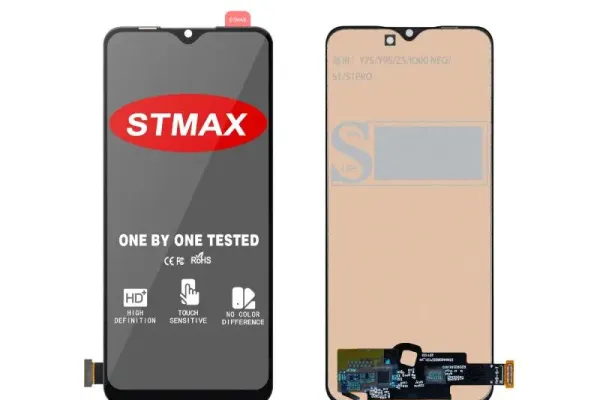
Improving Visibility with High-Brightness Industrial Displays
This article discusses the importance of high-brightness displays in industrial environments. It covers visibility challenges, power efficiency balance, application flexibility, and long-term brightness stability for industrial display systems.