
We Have The Best Solutions for Your Business
2013 Establish
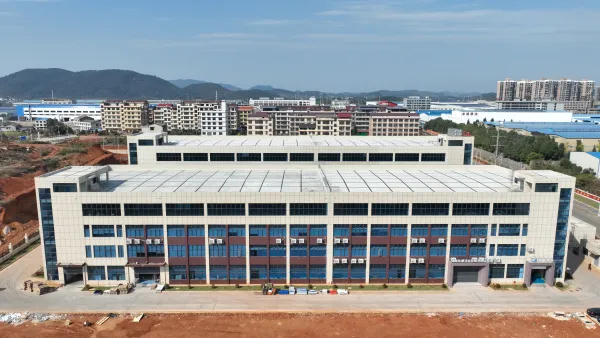
Founded in 2013, grown from Shenzhen's Huaqiangbei and Dongguan to a 100-mu park in Hunan, partnering OPPO, Xiaomi.
66000㎡ Factory Area
66000㎡ smart base integrates R & D, production & storage, with 9 specialized factories.
20000㎡ dust-free space
20000㎡ Class 100/1000 dust-free spaces enable high-precision display production.
ERP/MES
ERP/MES systems optimize production, ensuring a total output of approximately 70W PIC monthly, with a target capacity of 100W PIC.
When we founded STMAX in Shenzhen in 2016, the lcd touch screen market was fragmented. Companies would buy an LCD from one vendor, a touch sensor from another, and try to tape them together. The result? Dust, bubbles, and poor optical performance. I saw an opportunity to bring professionalism to this chaos. We decided that integration was the future.
Manufacturing a high-quality lcd touch screen is an art form performed in a Class 1000 clean room. The critical moment is the bonding. At STMAX, we have mastered both air bonding (using double-sided adhesive tape) and optical bonding (using LOCA or OCA). As an industry veteran, I cannot stress enough the value of optical bonding. It makes the lcd touch screen look like a single, solid piece of glass. The colors pop, the blacks are deeper, and mechanically, it becomes incredibly rigid.
But hardware is only half the battle. A lcd touch screen is useless if the firmware isn't tuned. I’ve seen clients struggle with screens that go crazy when a drop of water hits them or when the user puts on latex gloves. Our engineering team spends days fine-tuning the IC parameters. We adjust the threshold for touch detection to ensure that your medical device works with surgical gloves or that your outdoor payment terminal ignores rain.
We also focus on the "Cover Lens" or cover glass. In 2016, standard glass was enough. Today, our clients demand chemically strengthened glass, custom silk-screened logos, and specific cutouts for cameras and sensors. We treat the cover glass as the face of your brand.
When you source an lcd touch screen from STMAX, you aren't just buying components; you are buying a fully tested, integrated subsystem. We take the risk out of the assembly process. We ensure that when the user touches your device, the response is instant and the visual experience is flawless. That is the STMAX standard.
Frequently Asked Question
Do you have any question?
A: We primarily specialize in Projected Capacitive (PCAP) technology, which supports multi-touch and gestures, ideal for modern interfaces. However, for specific industrial legacy applications requiring gloved or stylus input, we can also manufacture Resistive lcd touch screen solutions. We tailor the technology to your specific use case.
A: Yes, optical bonding is one of our core competencies. By filling the air gap between the touch sensor and the LCD with optical resin, we significantly reduce reflection and improve contrast. An optically bonded lcd touch screen is also more durable and resistant to condensation, making it perfect for outdoor or humid environments.
A: Absolutely. We can customize the cover glass thickness (up to 6mm for vandal resistance), shape, and surface treatment. We offer Anti-Glare (AG), Anti-Reflective (AR), and Anti-Fingerprint (AF) coatings to ensure your lcd touch screen remains visible and clean in any lighting condition.
A: Industrial environments often have high electromagnetic interference (EMI). We utilize advanced touch controllers (like ILITEK or EETI) and tune the firmware of the lcd touch screen to reject noise. We can also adjust the sensitivity to prevent false touches caused by water droplets or electrical noise.
A: For the touch interface, we typically use I2C for smaller sizes and USB for larger sizes. The display component usually utilizes RGB, MIPI, LVDS, or eDP. We provide full datasheet support to help your engineers integrate the lcd touch screen with your host board seamlessly.
A: Experience is vital in lamination. Over nearly a decade, we have refined our clean-room processes to ensure zero dust inclusion during the bonding of the lcd touch screen. Our history allows us to anticipate integration challenges, providing you with a module that works perfectly right out of the box.
Our updates and blog posts
Selecting the Right TFT Display for Industrial Control Systems
Selecting the Right TFT Display for Industrial Control Systems
Designing Reliable Capacitive Touch Panels for Industrial Equipment
Designing Reliable Capacitive Touch Panels for Industrial Equipment
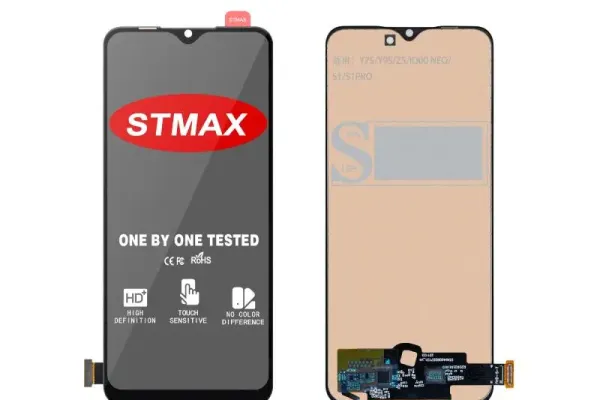
Improving Visibility with High-Brightness Industrial Displays
This article discusses the importance of high-brightness displays in industrial environments. It covers visibility challenges, power efficiency balance, application flexibility, and long-term brightness stability for industrial display systems.