
We Have The Best Solutions for Your Business
2013 Establish
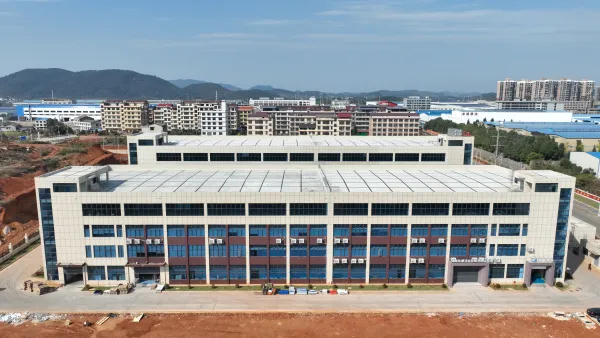
Founded in 2013, grown from Shenzhen's Huaqiangbei and Dongguan to a 100-mu park in Hunan, partnering OPPO, Xiaomi.
66000㎡ Factory Area
66000㎡ smart base integrates R & D, production & storage, with 9 specialized factories.
20000㎡ dust-free space
20000㎡ Class 100/1000 dust-free spaces enable high-precision display production.
ERP/MES
ERP/MES systems optimize production, ensuring a total output of approximately 70W PIC monthly, with a target capacity of 100W PIC.
In my nine years leading projects at STMAX, I've seen the term "OEM" thrown around loosely. To some, it just means "original." To us, an oem lcd screen represents a rigorous engineering standard. When a client approaches us to build a display for their new product, we don't just ask for the size; we ask for the use case. Is it for a sterile hospital room? A vibrating forklift dashboard? A sleek consumer wearable?
Designing an oem lcd screen starts with the "stack." We select the glass substrate (the actual LCD cell) based on the viewing angle requirements. For a medical device, we insist on IPS technology for wide viewing angles. Then comes the backlight. This is where many fail. A generic backlight is cheap but dim. We engineer custom LED rails for our oem lcd screen projects, calculating the power budget to maximize brightness without overheating the device.
The most critical, yet invisible, part is the IC (Integrated Circuit) driver. The driver dictates how the screen talks to your motherboard. We work closely with major IC houses like Ilitek and FocalTech. We tune the initialization code of the oem lcd screen to ensure it wakes up instantly and handles data transmission without noise. I've spent weeks with my team debugging timing sequences just to ensure a client's logo appears artifact-free on boot.
Finally, we address mechanical integration. An oem lcd screen isn't just glued in; it's engineered in. We design the FPC (flexible cable) with specific bend radii and EMI shielding. We create custom metal bezels that act as heat sinks and structural supports.
When you partner with STMAX for an oem lcd screen, you aren't buying a commodity. You are hiring a team of optical and electrical engineers who become an extension of your R&D department. We sweat the details so you don't have to.
Frequently Asked Question
Do you have any question?
We offer deep customization. You can modify the oem lcd screen dimensions, resolution, and interface (MIPI, RGB, LVDS). Physically, we can customize the FPC shape and length, the backlight intensity (up to 1000+ nits), and the cover glass design (shape, logo, cutouts). We build the screen to fit your device, not the other way around.
While standard products have lower MOQs, a fully custom oem lcd screen typically requires an MOQ of 1,000 to 3,000 units to amortize the NRE (Non-Recurring Engineering) costs effectively. However, we are flexible during the prototyping and pilot run phases to support your development cycle.
Generally, the process takes 4-6 weeks. This includes 1-2 weeks for counter-drawings and engineering review, and 3-4 weeks for tooling and sample production. Once the sample oem lcd screen is approved, mass production lead times are typically 4-5 weeks.
Our updates and blog posts
Selecting the Right TFT Display for Industrial Control Systems
Selecting the Right TFT Display for Industrial Control Systems
Designing Reliable Capacitive Touch Panels for Industrial Equipment
Designing Reliable Capacitive Touch Panels for Industrial Equipment
Improving Visibility with High-Brightness Industrial Displays
This article discusses the importance of high-brightness displays in industrial environments. It covers visibility challenges, power efficiency balance, application flexibility, and long-term brightness stability for industrial display systems.