

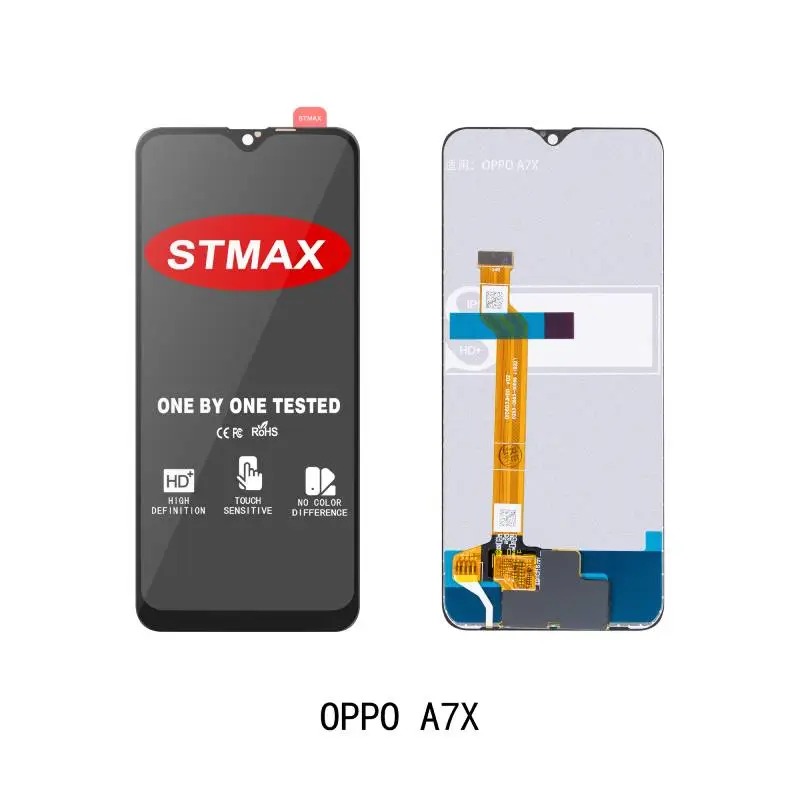
In the precision-driven world of smartphone manufacturing and repair, understanding the intricate details of mobile display assembly dimensions is the difference between a seamless fit and a costly failure.
Addressing the Fitment Crisis in Modern Screen Replacement
For wholesale distributors and high-volume repair centers, the most persistent challenge is not just the visual quality of a screen, but its physical integration. A discrepancy of even 0.1mm in mobile display assembly dimensions can lead to light leakage, frame pressure damage, or touch sensitivity failure. As devices become slimmer and bezels shrink, the margin for error has effectively vanished.
Are you struggling with screen modules that sit too high in the frame? Or perhaps you have encountered digitizers that ghost-touch because they are slightly misaligned with the chassis? This guide serves as a technical manual to help you navigate the complexities of display engineering, ensuring that every replacement part you source meets the rigorous standards of the original equipment manufacturer.
In this technical deep dive, you will gain insights into:
- The fundamental components that dictate display thickness and width.
- How STMAX maintains micron-level precision in clean-room environments.
- Case studies of popular models including OnePlus, Oppo, and Xiaomi.
The Anatomy of Precision: Understanding Display Components
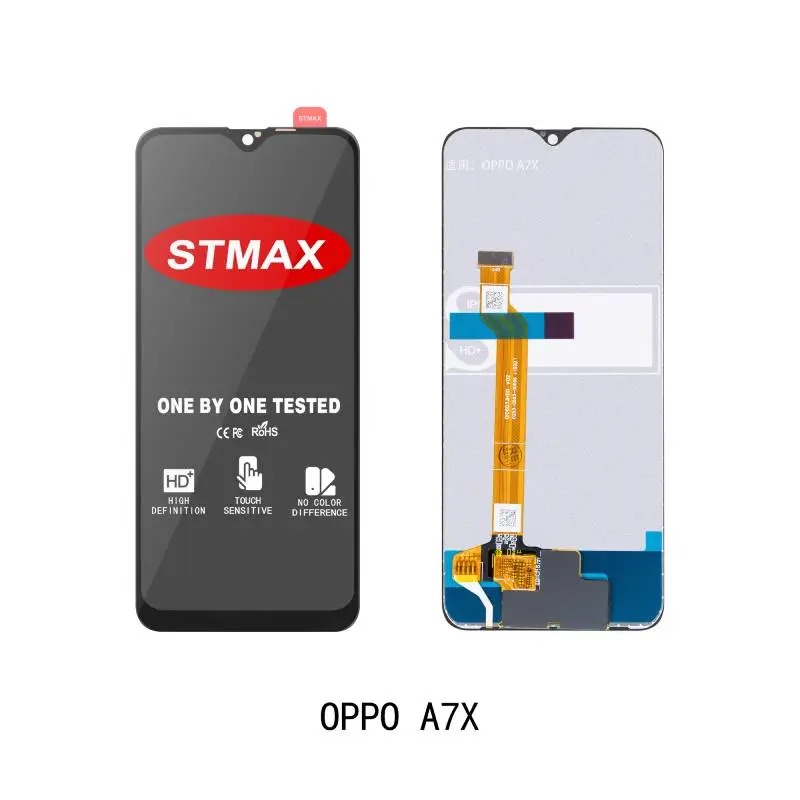
To master mobile display assembly dimensions, one must first understand the stacked architecture of a modern smartphone screen.
The Layered Stack-Up
Every millimeter of a display assembly is occupied by critical technology. A standard mobile display assembly consists of:
- Cover Glass: Typically 0.5mm to 0.7mm, providing structural integrity.
- OCA (Optically Clear Adhesive): Bonding layers with zero air gaps.
- Touch Digitizer: The sensitive layer that translates physical input.
- Polarizer: Essential for light management in LCD and OLED panels.
- Display Panel (LCD/OLED): The core visual engine.
- Backlight (for LCD): The thickest component in the stack.
Critical Factors in Mobile Display Assembly Dimensions
At STMAX, we utilize a full-chain production approach to ensure that every high-precision display meets the exact mechanical specifications of the original chassis.
Z-Height Precision
The total thickness of the stack. If the Z-height exceeds the frame depth, the screen will protrude, making it vulnerable to side impacts.
Bezel Consistency
Modern designs like the OnePlus 8T AMOLED require ultra-thin bezels to maintain the Screen-to-Body ratio.
FPC Connector Placement
The Flexible Printed Circuit must align perfectly with the motherboard socket to prevent signal noise or disconnection.
Why STMAX is the Preferred Choice for Precision Components
Based on our experience serving hundreds of global repair brands, we have optimized our 12,000-square-meter clean room to handle the most demanding mobile display assembly dimensions.
Advanced Manufacturing Standards
Our commitment to full-chain production means we control every step, from raw material inspection to final functional testing. This ensures:
- Strict adherence to structural design factors.
- Usage of high-grade ICs for stable refresh rates.
- Precise cold-pressed frames that match OEM curvature.
Case Study: Xiaomi Redmi Series
For the Redmi Note 12 LCD Display, our engineering team focuses on the backlight thickness. Many aftermarket parts use inferior backlights that increase the total mobile display assembly dimensions, leading to "frame popping." STMAX uses ultra-thin light guide plates to maintain an original profile.
Technical Comparison: LCD vs. AMOLED Dimensions
| Feature | AMOLED Assembly | TFT LCD Assembly |
|---|---|---|
| Typical Thickness | ~1.2mm - 1.8mm | ~2.0mm - 2.8mm |
| Component Count | Self-emissive (No backlight) | Requires LED Backlight Unit |
| Flexibility | High (Supports curved edges) | Rigid (Flat designs only) |
| STMAX Solution | OnePlus 7T AMOLED | Oppo A92s LCD |
Frequently Asked Questions
Why are mobile display assembly dimensions different between batches?
Variations often occur due to different manufacturers of the raw glass or backlight units. At STMAX, we implement a unified sourcing strategy and strict QC to ensure batch-to-batch consistency within a 0.05mm tolerance.
Can a screen with incorrect dimensions damage the phone?
Yes. If the assembly is too thick, it can apply excessive pressure to the internal battery or motherboard components, potentially leading to short circuits or localized heating issues.
Does STMAX support custom dimensions for industrial applications?
Absolutely. Beyond mobile phones, we provide industrial-grade TFT modules where custom mounting and bezel sizes are frequently required for embedded systems.
Ready to Elevate Your Supply Chain Quality?
Precision in mobile display assembly dimensions is not an option—it is a requirement for modern business success. Partner with STMAX for display solutions that fit perfectly, perform brilliantly, and last longer.
© 2026 STMAX Display Technology. All Rights Reserved. Precision Engineering for the Global Mobile Industry.