

Industrial equipment developers, OEMs, and embedded system engineers face a recurring challenge: selecting a display that stays readable and reliable under demanding conditions. Whether the equipment runs on a factory floor, in an outdoor control cabinet, or inside a medical instrument, the display is the primary point of interaction between machine and operator — and a weak choice surfaces as readability problems, environmental failures, or integration headaches long after the product ships.
Choosing an industrial TFT LCD module is not simply a matter of comparing size, resolution, and price. Brightness, viewing angle, interface type, operating temperature, touch requirements, mechanical integration, and long-term supply reliability all influence whether a display performs as expected over the life of the equipment. A module that looks ideal on a specification sheet can still fail in the field if it was specified without regard for the application environment.
This guide explains the key factors OEMs and equipment manufacturers should consider when selecting an industrial TFT LCD module.
What Is an Industrial TFT LCD Module?
TFT stands for thin-film transistor. In a TFT LCD, each pixel is controlled by its own transistor, forming an active-matrix structure that allows precise, independent control of every pixel. This lets a TFT LCD display render full-color images with sharp detail and consistent brightness — something passive LCD technologies cannot match. For equipment that must present graphics, menus, or real-time data, this active-matrix structure is the foundation of a usable interface.
It is important to distinguish a bare panel from a complete module. A panel provides only the glass substrate and pixel array; on its own it cannot connect to a host controller or mount into equipment. A finished module adds the driver electronics that translate incoming signals into pixel data, an interface to the system's mainboard, a flexible printed circuit (FPC), a backlight unit, and — where required — an integrated touch layer.
For procurement and engineering teams, this distinction matters: specifying an industrial display module means specifying a component that must match the host interface, the enclosure's mechanical design, and the product's interaction model.
Key Factors to Consider When Choosing an Industrial TFT LCD Module
1. Display Size and Resolution
Screen size is determined by the equipment's dimensions, the viewing distance, the mounting space, and the amount of information the interface must present. A handheld instrument may need a small display viewed at close range, while a control panel viewed from several feet away may require a larger screen simply to keep text and icons legible. Bigger is not automatically better — an oversized display can raise cost, increase power draw, and complicate mechanical integration without improving usability.
Resolution determines image clarity, text readability, UI detail, and how much data can be shown at once. Higher resolution allows finer text and denser data visualization, valuable for monitoring and diagnostic interfaces, but it also places greater demands on the host processor and graphics pipeline, raises power consumption, and may be unnecessary if the application only shows simple status information. Resolution should be matched to the controller's capability and to what the equipment needs to display.
2. Brightness and Viewing Angle
Industrial environments are rarely as forgiving as a climate-controlled office. A display on a factory floor or outdoor equipment must compete with strong ambient light, and a screen that looks adequate indoors can become nearly unreadable outdoors. Higher brightness helps the display stay legible under strong light; higher contrast improves the separation between text and background; and a wider viewing angle keeps the image readable from off-center positions, which matters whenever operators do not stand directly in front of the screen.
Where an application demands exceptional brightness — such as sunlight-readable equipment — high-brightness display solutions become relevant. STMAX's display solutions support brightness capabilities up to 3000 nits at the top of their range. This figure describes the upper capability of the company's display solutions rather than a specification shared by every product, so the required brightness should always be confirmed against the datasheet of the specific model being considered.
3. Operating Temperature
Temperature is one of the most common causes of field failures in industrial displays, because industrial equipment often operates in conditions consumer devices never encounter: cold storage areas, hot production lines, enclosed cabinets where heat accumulates, and outdoor installations exposed to seasonal extremes — the situations examined in STMAX's article on wide-temperature LCD displays for outdoor control systems. Two figures usually matter: the operating temperature range, in which the module functions correctly, and the storage temperature range, which it can survive while powered off. Stability across the range matters too, since a display may power on cold yet show slow response or color shift until it warms up.
Choosing a temperature range should begin with the actual environment the equipment will face, then include a margin for real-world variation. As a concrete example, the STMAX F19 5.0-inch TFT LCD Module is specified for operation from -20°C to 70°C. That figure describes the F19 specifically; it should not be confused with the broader temperature capability STMAX describes for its display solutions overall (down to -30°C and up to 85°C), which is a statement of solution-level capability rather than the specification of any single product. Buyers should always read the operating temperature from the individual product's datasheet.
How to Choose the Right LCD Interface
The interface is the electrical link between the display module and the host system, and it is a common source of integration problems. Several families appear frequently in industrial projects:
- RGB — a parallel interface that is straightforward for smaller displays and simpler controllers, widely used in compact equipment.
- LVDS — a low-voltage differential signaling interface suited to higher resolutions and longer cable runs, common in industrial and panel-mount systems.
- MIPI — originally developed for mobile devices, MIPI supports high data rates in a compact form factor and appears in many embedded and portable designs.
- RS-232 — a serial interface often chosen where simple, robust communication and easy integration with existing control systems are priorities.
Interface selection should not be driven by familiarity alone. It should follow the mainboard and controller the system already uses, the data transmission requirements of the chosen resolution and refresh rate, the cable length and routing inside the enclosure, and the overall system architecture. A display with the ideal panel technology can still stall a project if its interface does not match the host hardware — a theme explored in STMAX's guide to interface selection and compatibility for industrial LCD modules. The F19 industrial TFT LCD module, for instance, uses an RS-232 interface, illustrating how interface selection is best considered together with the system architecture.
IPS TFT LCD for Industrial Applications
In-plane switching (IPS) aligns liquid crystal molecules horizontally, producing characteristics that matter in industrial use: a wide viewing angle, stable image quality across that range, consistent color reproduction, and better visibility from off-axis positions. For equipment where an operator may view the screen from the side, where several people read the same display, or where color consistency affects interpretation, IPS can make a meaningful difference. It tends to suit control panels, industrial instruments, monitoring equipment, and embedded systems.
Like any technology choice, however, IPS is not automatically the right answer for every project. Whether to select an IPS panel depends on the equipment's visual requirements, the cost target, and the operating environment; specifying IPS where it is not needed can add cost without adding value.
Do You Need a Touchscreen?
Touch functionality should follow the application rather than a default assumption. Industrial displays generally fall into three categories: non-touch displays, capacitive touch, and resistive touch. Capacitive touch offers a familiar, responsive, multi-point experience and suits interfaces that resemble modern consumer devices. Resistive touch responds to pressure and can be operated with gloves or a stylus, often valuable in field and factory settings. Non-touch displays are simpler, often more cost-effective, and adequate when the equipment relies on physical buttons or when the display is used purely for monitoring.
Touchscreen integration tends to make sense for human-machine interfaces, control panels, smart equipment, and interactive terminals — anywhere the operator interacts directly with on-screen elements. Non-touch displays are often the better fit for monitoring systems, instrument readouts, and embedded equipment where the display presents information rather than receives input. Where touch is required, confirm how the touch layer is integrated, since it affects the module's mechanical design and total thickness; STMAX's guide to integrating capacitive touch panels covers the main considerations. STMAX's product listings include models carrying "touch sensitive" capability among their feature tags, though the touch configuration of a specific model should be verified against that model's details.
When Should You Choose a Custom TFT LCD Module?
Standard, off-the-shelf modules cover a great deal of equipment, but they cannot meet every requirement. A custom TFT LCD module becomes the practical choice when the equipment design cannot be built around an available standard part. Typical situations include a non-standard screen size that must fit a specific enclosure, a special aspect ratio, a custom interface that must match an existing host system, special mounting requirements or form factor, high-brightness requirements beyond standard offerings, wide-temperature operation, and integrated touch that must align with a particular mechanical design.
In these cases, working with a supplier able to modify dimensions, adapt interfaces, integrate touch, and support environmental requirements is essential. STMAX states that it offers customized TFT and AMOLED solutions and can support display formats including long screens, circular screens, square screens, and free-form shapes — a useful indication of the kind of customization a display partner can provide when a standard module will not fit. The wider design considerations for custom TFT LCD display modules are useful background for teams evaluating this route.
Industrial Applications for TFT LCD Modules
Industrial IoT
Industrial IoT deployments depend on displays that can present sensor data, device status, and control options at the edge of a network. Monitoring devices, industrial controllers, and connected smart equipment all rely on readable, reliable displays that operate continuously in industrial settings. STMAX lists Industrial IoT among the application areas its display solutions address — a role explored in its article on STMAX LCD's role in the IoT ecosystem.
Smart Manufacturing Equipment
On the production floor, displays are the interface between operators and machines. Machine interfaces, control panels, and monitoring displays must remain legible under factory lighting, tolerate temperature swings, and function over long service lives — the subject of STMAX's article on the application prospects of industrial-grade display panels in smart manufacturing.
Smart Devices
Beyond heavy industry, TFT LCD modules appear in embedded systems, smart terminals, and control interfaces where compact size and dependable operation are priorities. These devices benefit from modules that combine a readable display with efficient power use and straightforward integration.
How to Evaluate an Industrial TFT LCD Supplier
Because industrial display projects run for years and often require support long after the initial order, the supplier behind the module matters as much as the module itself. Three areas are worth examining closely.
Manufacturing capability. Ask about the supplier's production facilities, research and development capability, clean-room production, and level of automation. These factors influence both quality and the ability to scale. As a point of reference, STMAX describes a 66,000㎡ factory area and 20,000㎡ of dust-free (clean-room) production space supported by ERP/MES systems — figures that describe STMAX's own footprint, which buyers should weigh against their project's needs.
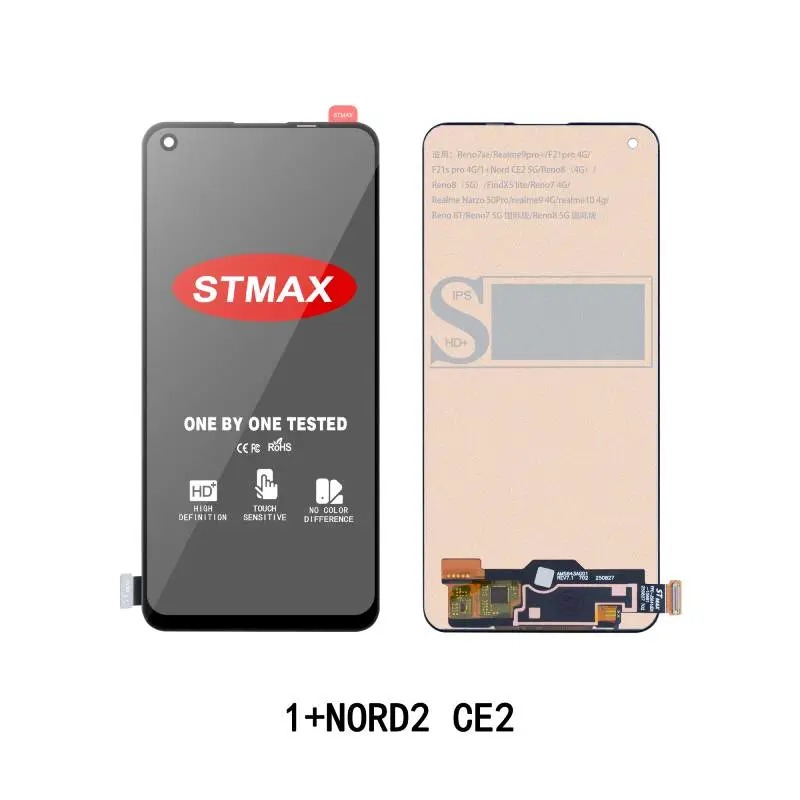
Quality control. Reliable industrial displays come from consistent process control, not from inspection alone. Look for functional testing, display inspection, touch testing, and reliability testing as part of the supplier's workflow. STMAX marks its products with features such as "ONE BY ONE TESTED" and lists CE/RoHS compliance — though the applicable certifications and test scope should always be confirmed for the specific product.
Customization capability. Confirm whether the supplier can modify dimensions, customize interfaces, integrate touch, and support special environmental requirements. Customization ability is often what separates a supplier that can fill a single standard order from one that can support a product through its full lifecycle.
Why Choose STMAX for Industrial TFT LCD Solutions
STMAX provides TFT display solutions, custom display solutions, and industrial-grade display products for equipment manufacturers and OEM buyers worldwide. Its offering spans TFT, OLED, and Micro-LED technologies alongside optical bonding solutions, supported by the customization capability described above — including long, circular, square, and free-form display formats.
On the manufacturing side, STMAX operates a large-scale production base with clean-room capacity and ERP/MES-managed processes, and applies individual-unit testing and CE/RoHS compliance across its product lines. Together with high-brightness and wide-temperature capability and touch integration, this lets STMAX support industrial display projects that extend beyond standard catalog parts.
For buyers, the practical result is a supplier able to serve global B2B requirements: standard industrial TFT LCD modules such as the F19 5.0-inch TFT LCD Module, custom display development where standard parts do not fit, and long-term supply support for products that must remain in production for years. Whether the requirement is a straightforward module for a control panel or a fully customized display for a specialized instrument, STMAX works with customers to match the display to the equipment. Explore the product catalog and industrial display applications, or contact the team to discuss a specific project.
Frequently Asked Questions
What is an industrial TFT LCD module?
An industrial TFT LCD module is a display assembly built around an active-matrix thin-film transistor LCD panel and integrated with the electronics and structures needed to operate inside equipment. Beyond the panel itself, it typically includes driver electronics, an interface to the host system, a flexible printed circuit, a backlight unit, and — where required — a touch layer. The "industrial" designation reflects requirements such as wide temperature operation, long service life, and reliable performance.
How do I choose the right TFT LCD size for industrial equipment?
Start with the equipment's physical dimensions and mounting space, then consider the viewing distance and how much information the interface must show. A close-range handheld device and a control panel viewed from several feet away call for very different sizes. Larger is not automatically better — an oversized display adds cost, draws more power, and complicates integration.
What operating temperature should an industrial LCD support?
There is no single range that suits every application; the correct range depends on where the equipment will operate. Define the real conditions the equipment will face and add a margin for environmental variation, and consider both the operating and storage ranges, since a module must survive transport and shutdown as well as active use. Always read the temperatures from the individual product's datasheet rather than assuming one range covers a whole catalog.
Can TFT LCD modules be customized for OEM equipment?
Yes. When a standard module cannot fit an equipment design, customization can cover non-standard sizes and aspect ratios, special mounting or form-factor requirements, custom interfaces, high-brightness or wide-temperature requirements, and integrated touch. Some suppliers also support unusual display shapes: STMAX, for example, offers customized TFT and AMOLED solutions and supports long, circular, square, and free-form display formats.
What should I consider when choosing an industrial TFT LCD manufacturer?
Evaluate five things: product specifications, quality control processes such as functional, display, touch, and reliability testing, customization capability, manufacturing capability including production scale and R&D resources, and long-term supply reliability. Because industrial products stay in service for years, consistent supply and lifecycle support often matter more than the lowest unit price.
Looking for an industrial TFT LCD module for your equipment?
STMAX provides TFT display solutions and custom display development for global OEM and industrial buyers.
View Products Contact STMAX