

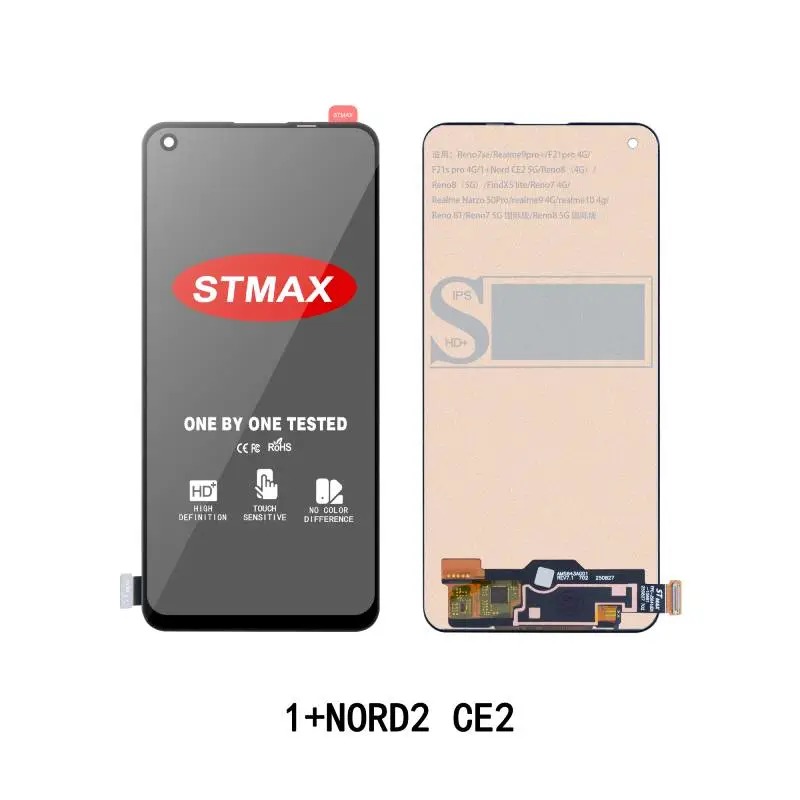
The Definitive Guide to Professional Lcd Screen Replacement for Global Smart Devices
In an era where digital interfaces are the primary bridge between humans and technology, the integrity of a display module is paramount. Businesses, repair centers, and industrial manufacturers often face the critical challenge of sourcing reliable components when a device fails. Whether it is a high-end smartphone or a specialized industrial controller, a substandard Lcd Screen Replacement can lead to hardware incompatibility, poor touch responsiveness, and ultimately, a tarnished brand reputation.
How can distributors ensure they are providing components that match original equipment manufacturer (OEM) standards? This guide serves as a comprehensive resource for understanding the complexities of display technology, the manufacturing excellence of STMAX, and the strategic advantages of choosing high-precision modules for your supply chain.
Core Fundamentals of Display Assembly Technology
Before diving into the procurement process, it is essential to understand that an Lcd Screen Replacement is not merely a piece of glass. It is a sophisticated multilayered assembly consisting of the polarizer, the Liquid Crystal layer, the TFT (Thin Film Transistor) backplane, and the integrated touch digitizer. At STMAX, we categorize these solutions into two primary architectures:
TFT-LCD Modules
Commonly used in industrial applications and mid-range smartphones, these offer exceptional durability and brightness. Our IPS (In-Plane Switching) technology ensures wide viewing angles and consistent color reproduction across different environments.
AMOLED & OLED Assemblies
Found in premium devices such as the OnePlus and Oppo Reno series. These modules provide deeper blacks and higher contrast ratios. STMAX specializes in high-refresh-rate OLED replacements that maintain the device's original aesthetic and performance.
Strategic Solutions for Diverse Brands and Applications
The modern market requires a versatile supplier. STMAX provides a full-chain production approach, ensuring that every Lcd Screen Replacement we ship meets the precise technical specifications of the target brand. Our portfolio covers a vast range of products:
- OnePlus Series: High-performance AMOLED displays for models like the OnePlus 8T, 7T, and Nord 3 5G, preserving the seamless fluid motion users expect.
- Oppo and Vivo: Precision-engineered LCD and OLED assemblies for the Reno, Y, and V series, focusing on color accuracy and structural integrity.
- Xiaomi and Redmi: Robust replacement parts for the Redmi Note 12 and Poco series, designed for high-volume distribution and easy installation.
- Industrial Grade Modules: TFT-LCD panels with RS-232 interfaces, designed for operating temperatures between -20 and +70 degrees Celsius, ideal for smart manufacturing.
Why Professional Standards Matter in Manufacturing
According to our experience serving hundreds of global distributors, the difference between a successful repair and a return lies in the manufacturing environment. STMAX operates a 12,000-square-meter clean room facility to eliminate dust contamination during the lamination process. This ensures that every Lcd Screen Replacement is free from backlight bleeding, dead pixels, or touch-dead zones.
Full Chain Production
We control everything from glass cutting to final module assembly, ensuring rigorous quality oversight.
High Precision Testing
Each screen undergoes automated optical inspection (AOI) to guarantee perfect visual performance.
IoT Ecosystem Readiness
Our displays are designed to support the expanding IoT ecosystem with low power consumption and high reliability.
Step-by-Step Selection Guide for Large-Scale Procurement
Selecting the right display module requires a systematic approach to avoid compatibility issues. Follow this strategic checklist:
Step 1: Interface Verification
Ensure the connector pins and flex cable layout match the motherboard of the device exactly. In industrial contexts, check for RS-232 or LVDS compatibility.
Step 2: Luminance and Contrast Assessment
For outdoor equipment, prioritize high-brightness panels. For smartphones, ensure the Lcd Screen Replacement supports the original resolution (FHD/QHD).
Step 3: Sensitivity Calibration
Verify that the touch digitizer supports multi-touch functionality and has the correct sensitivity for various glass thicknesses.
Step 4: Quality Classification
Choose between AMOLED, OLED, or TFT based on the end-user's budget and the technical requirements of the device.
Frequently Asked Technical Questions
How do you ensure the compatibility of your display modules?
Our engineering team uses original device motherboards to test every batch. We maintain a library of firmware to ensure that features like auto-brightness and fingerprint sensing work flawlessly after the Lcd Screen Replacement is installed.
What makes STMAX products different from generic aftermarket parts?
STMAX (Jiushun Hongye) focuses on premium materials. We use high-quality polarizers and IC drivers that reduce power consumption and extend the lifecycle of the display panel, unlike cheaper alternatives that often overheat or flicker.
What is the typical lead time for bulk orders?
By leveraging our full-chain production facility, we maintain a stable stock for common models like the OnePlus Nord and Xiaomi series, allowing for rapid global shipping and reduced downtime for your clients.
Optimizing Your Supply Chain with STMAX
The demand for high-quality display solutions continues to surge as smart devices become more integrated into our lives and industries. Partnering with a manufacturer that understands the nuances of Lcd Screen Replacement technology is the most effective way to ensure long-term business growth.
Guangdong Jiushun Hongye Technology Co., Ltd. (STMAX)
Specializing in Professional Lcd Screen Replacement for Global Brands.
© 2026 STMAX LCD Display. All Rights Reserved.