

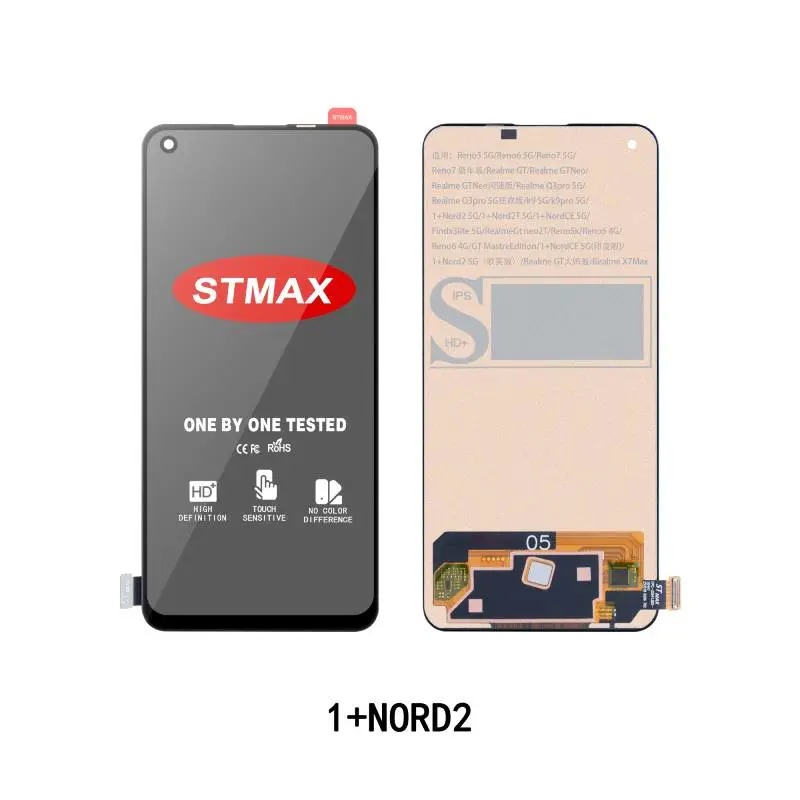
In the rapidly evolving landscape of telecommunications, the display remains the most critical point of interaction between a user and their device. However, for repair professionals and distributors, the challenge is clear: rising costs, inconsistent hardware quality, and the increasing complexity of screen integration. When a screen fails, whether due to impact or internal degradation, the solution requires more than just a simple glass replacement. It demands a high-precision Mobile Display Assembly that restores original functionality and visual clarity.
Are you struggling with high return rates due to inferior touch sensitivity? Or perhaps your current supply chain cannot provide the specific color accuracy required for high-end AMOLED panels? This article serves as a comprehensive tool to bridge the knowledge gap, offering strategic insights into the manufacturing, selection, and implementation of premium display modules.
What You Will Learn in This Guide:
Critical differences between various display technologies (OLED, AMOLED, TFT).
How STMAX leverages full-chain production to ensure component integrity.
Professional troubleshooting and installation protocols for modern assemblies.
Strategic procurement advice for maximizing device lifecycle and ROI.
Understanding the Anatomy of a Mobile Display Assembly
A Mobile Display Assembly is a sophisticated multi-layered component that integrates several critical technologies into a single unit. Understanding these layers is essential for any professional involved in the smart device ecosystem. At its core, the assembly consists of the protective cover glass, the touch digitizer, and the display panel itself.
1. The Display Panel (LCD vs. OLED)
The display panel is the engine of the assembly. Modern devices utilize either Liquid Crystal Display (LCD) or Organic Light Emitting Diode (OLED) technology. For instance, the Redmi Note 12 LCD Display provides high-definition clarity using traditional backlighting, whereas premium models like the OnePlus 8T AMOLED Display Assembly offer self-emissive pixels for perfect blacks and vibrant contrast.
The touch digitizer layer is vacuum-bonded to the panel. This layer translates physical touch into electrical signals. In high-performance modules, such as those found in our comprehensive product catalog, the integration of the digitizer is seamless, ensuring zero latency and high precision for professional applications and gaming.
The Engineering Behind High-Precision Assemblies
Manufacturing a reliable Mobile Display Assembly requires an environment free from microscopic contaminants. At STMAX, we operate a 12,000 square meter clean room, which is essential for the bonding process. Even a single dust particle can lead to "dead pixels" or structural weaknesses in the screen's architecture.
Full-Chain Production Excellence
Unlike many suppliers who simply assemble outsourced parts, we utilize a full-chain production model. This means that every step—from the etching of the glass to the final testing of the IC chips—is managed under one roof. This control is why our Oppo Reno5 OLED Assembly maintains such high stability in diverse environmental conditions.
Material Selection
We source premium raw materials that ensure our panels maintain brightness even under direct sunlight, reaching up to 800-1200 nits in specific AMOLED models.
IC Compatibility
Every Mobile Display Assembly is equipped with a high-grade driver IC to ensure compatibility with the original device software, preventing "unsupported part" warnings.
Automated Calibration
Using advanced optical sensing equipment, we calibrate the color temperature of each unit to match industry-standard sRGB and DCI-P3 color gamuts.
Versatile Solutions for Global Smart Device Brands
Our expertise extends across the entire spectrum of mobile technology. Whether you are servicing flagship AMOLED devices or industrial-grade tablets, our portfolio is designed for precision fitment.
| Brand Family | Key Featured Products | Technology Used |
|---|---|---|
| OnePlus Series | OnePlus Nord 3 Assembly | AMOLED High Refresh Rate |
| Oppo / Vivo | Oppo K12x OLED Display | Slim-Bezel OLED Technology |
| Xiaomi / Redmi | POCO F4 Display Replacement | IPS/LCD Full Assembly |
| Huawei / Honor | Huawei Mate 60 Screen | Industrial-Grade Durability |
Why STMAX is the Trusted Partner for Display Solutions
Experience and expertise are not just buzzwords at STMAX; they are the foundation of our company mission. Having served the global market for years, we understand that reliability is the primary concern for businesses. A faulty Mobile Display Assembly doesn't just cost a single sale; it damages your brand's reputation.
Rigorous Quality Control Standards
Every single module undergoes a 5-step testing protocol before it leaves our facility:
- Optical Inspection: Checking for dead pixels, backlight bleeding, and color uniformity.
- Touch Calibration: Ensuring 10-point multi-touch responsiveness across the entire surface.
- Structural Stress Test: Verifying the bonding strength of the frame and glass.
- Software Handshake: Testing IC compatibility with various OS versions.
- Aging Test: Operating the screen for continuous hours to ensure electrical stability.
This commitment to excellence ensures that our partners receive only the highest-performing hardware, reducing RMA rates by up to 40% compared to generic market alternatives.
Frequently Asked Questions (FAQ)
How do I ensure the assembly is compatible with my specific phone model?
Compatibility is determined by the specific model number (e.g., V2336 for the Vivo Y200). We provide detailed technical specifications for each Y200 LCD Touch Screen Assembly to ensure a perfect fit. Always check the flex cable markings and IC version before installation.
What is the difference between "with frame" and "no frame" assemblies?
A "with frame" Mobile Display Assembly includes the chassis of the phone, making installation faster and reducing the risk of damaging the panel during gluing. "No frame" versions require the technician to clean and glue the new panel into the old frame, which is more cost-effective but requires higher skill levels.
Do your AMOLED displays support in-screen fingerprint sensors?
Yes, our premium AMOLED replacements, such as those for the OnePlus 7T, are engineered with high-transparency windows to support optical under-display fingerprint scanners.
What is the typical lead time for bulk orders?
Due to our full-chain production capacity, we maintain a significant stock of popular models. Standard bulk orders are processed within 3-7 business days, depending on the volume and customization requirements.
Secure Your Supply Chain with Professional Display Engineering
The quality of your Mobile Display Assembly is the most direct reflection of your business's commitment to quality. Don't settle for inconsistent components that lead to customer dissatisfaction. Partner with STMAX for precision-engineered, high-reliability display solutions.
STMAX: Industrial-Grade Reliability | 12,000sqm Clean Room | Full-Chain Production Excellence