

How to Choose a Reliable Mobile Phone Replacement Screen Supplier
The mobile phone repair industry is fiercely competitive, and the quality of your mobile phone replacement screen supplier directly impacts your repair efficiency, customer satisfaction, and profit margins. A single batch of defective screens can trigger customer complaints, warranty returns, and reputational damage that far exceeds the cost savings of choosing a cheaper supplier. For overseas buyers seeking a long-term supply partner, knowing how to evaluate reliability, assess product quality, and minimize procurement risk is essential. This guide walks you through the critical factors to consider when selecting a mobile phone replacement screen supplier for your business.
Why Choosing the Right Replacement Screen Supplier Matters
Many repair shop owners and wholesale distributors learn the hard way that the cheapest screen supplier is rarely the most cost-effective. Partnering with the wrong supplier can lead to a cascade of problems that erode profitability and customer trust:
- High defect rates: Substandard screens with manufacturing flaws arrive DOA or fail shortly after installation, forcing you to absorb replacement costs and lose billable repair time.
- Touch issues: Screens with poorly calibrated digitizers may exhibit dead zones, ghost touches, or delayed response, leading to immediate customer complaints and rework.
- Color inconsistency: Replacement panels that differ visibly in color temperature, brightness, or contrast from the original display are immediately noticeable to customers and signal poor quality.
- Delivery delays: Unreliable suppliers with inconsistent stock and production capacity cause missed deadlines, lost sales opportunities, and damaged relationships with your own customers.
Beyond these immediate problems, an unreliable supplier creates long-term risk: warranty claims pile up, your brand reputation suffers, and the constant search for replacement suppliers wastes valuable time. Choosing a dependable mobile phone replacement screen supplier from the outset prevents these issues and builds a foundation for sustainable business growth. For a broader understanding of the market, see our mobile phone screen technology types and replacement guide.
Key Factors to Evaluate a Mobile Phone Screen Supplier
Evaluating a potential mobile phone replacement screen supplier requires looking beyond price quotes and sales pitches. The following factors determine whether a supplier can consistently deliver quality products that keep your business running smoothly.
Product Quality and Testing Standards
Quality is the single most important criterion when evaluating a screen supplier. Every replacement screen must meet functional and visual standards that match or closely approximate the original equipment manufacturer (OEM) specification. Key quality indicators to verify include:
- Dead pixels: Even a single dead or stuck pixel on a replacement screen is unacceptable. Quality suppliers perform 100% pixel-level inspection before shipment.
- Touch sensitivity: The digitizer must respond accurately across the entire screen surface without lag, dead zones, or false touches. Test for consistent multi-touch performance.
- Brightness: Replacement screens should achieve brightness levels comparable to OEM panels. Dim screens are immediately noticed by end users and signal inferior backlight quality.
- Color accuracy: Color reproduction should match the original display in hue, saturation, and temperature. Significant color shifts indicate low-quality panels or incorrect ICC profiles.
- Glass quality: The cover glass must have proper hardness (typically 7H or above), oleophobic coating, and correct thickness to ensure durability and authentic feel.
Ask potential suppliers about their testing protocols. A reliable supplier should be able to describe their quality inspection process in detail, including visual inspection, functional testing, and sampling-based reliability testing. For more on quality expectations, read our complete guide to OEM LCD screen quality and manufacturing.
Product Compatibility and Model Coverage
A practical mobile phone replacement screen supplier must cover the brands and models your business actually repairs. The most commonly repaired brands include:
- Huawei: Including popular models such as the Mate and Nova series. See our Huawei Mate 60 screen assembly and Huawei Nova 10SE/Nova 11SE OLED replacement.
- OPPO: Covering Reno, A-series, and K-series models. See our OPPO Reno7 Pro LCD replacement and OPPO Reno5 OLED display assembly.
- Vivo: Including V-series, S-series, and Y-series. See our Vivo V20 LCD touch screen assembly and Vivo V19 LCD screen assembly.
- Xiaomi: Including Mi-series, Redmi-series, and Poco models. See our Xiaomi Mi 11 Lite display replacement and Redmi Note 10 Pro LCD replacement.
- OnePlus: Covering OnePlus and Nord models. See our OnePlus 8T AMOLED display assembly.
A supplier with broad model coverage saves you the hassle of managing multiple vendor relationships and ensures you can source all your replacement screens from a single, dependable partner. For a comprehensive product overview, visit our full product catalog.
Production Capability and Supply Stability
For wholesale buyers and large repair chains, a supplier's production capacity and supply stability are make-or-break factors. Even the highest quality screen is worthless if it arrives three weeks late. Evaluate the following:
- Manufacturing capacity: Can the supplier handle your order volume, including seasonal spikes? Ask about monthly production capacity and whether they have their own factory or rely on third-party OEMs.
- Stock availability: Does the supplier maintain inventory of your most-needed models, or is everything made-to-order? A supplier with ready stock can ship within 1-3 days, while make-to-order typically requires 7-15 days.
- Lead time: What is the typical lead time from order confirmation to shipment? For repeat orders, can they commit to a fixed delivery schedule? Reliable suppliers provide clear lead time commitments and proactively communicate any delays.
Supply stability also depends on the supplier's component sourcing. Manufacturers with established relationships with panel makers and IC suppliers are less vulnerable to component shortages that can disrupt the entire supply chain. Learn more about production capabilities in our article on full-chain production and display quality.
OEM and Customization Capability
For distributors and brand owners, the ability to customize products is a significant value-add. A capable mobile phone replacement screen supplier should offer:
- Logo customization: Printing your brand logo on the screen assembly, packaging, or protective film for brand-building and market differentiation.
- Packaging customization: Custom retail packaging, anti-static bags, or bulk packaging designed to your specifications for efficient logistics and professional presentation.
- Product labeling: Customized model labels, QR codes, or serial numbers for inventory tracking and warranty management.
Suppliers with OEM/ODM capabilities demonstrate a higher level of manufacturing sophistication and are generally more reliable long-term partners. For more on OEM standards, read our comprehensive guide to OEM LCD screen quality and manufacturing excellence.
Types of Mobile Phone Replacement Screens Available
Understanding the different types of replacement screens available helps you match the right product to your customers' needs and budgets. A reliable supplier should offer multiple screen types to cover various repair scenarios.
LCD Screen Replacement
LCD (Liquid Crystal Display) replacement screens are the most widely used type in the mobile phone repair market. They are cost-effective and widely compatible across thousands of phone models. LCD replacements are suitable for budget-conscious repairs and older device models where OLED is not standard. For a detailed overview, see our complete guide to phone LCD screen technology and replacement.
OLED Screen Replacement
OLED (Organic Light-Emitting Diode) replacement screens offer higher contrast, deeper blacks, and better display performance compared to LCD. They are the preferred choice for premium phone models that originally shipped with OLED displays. Replacing an OLED screen with an LCD alternative often results in visible quality differences that end users may notice. See our AMOLED screen replacement products for examples.
LCD Touch Screen Assembly
An LCD touch screen assembly is an integrated display solution that combines the LCD panel, touch digitizer, and frame into a single pre-assembled unit. This type offers the easiest installation — technicians simply transfer the frame assembly without separating layers — reducing repair time and the risk of installation damage. For more on this topic, read our complete guide to LCD touch screen technology and applications.
Why Work Directly With a Phone Display Manufacturer
When sourcing replacement screens, buyers often face a choice between working directly with a manufacturer or going through a trading company. While trading companies may offer a wider product range and lower minimum order quantities, working directly with a phone display manufacturer provides distinct advantages:
| Factor | Direct Manufacturer | Trading Company |
|---|---|---|
| Quality control | Direct oversight of production and testing | Limited visibility into manufacturing process |
| Supply stability | Owns production capacity, more resilient to demand spikes | Depends on upstream suppliers, higher stock-out risk |
| Pricing | Factory-direct pricing, no middleman markup | Higher prices due to intermediary margin |
| Technical support | Direct access to engineering team for issue resolution | Limited technical knowledge, relays issues to factory |
For businesses planning to scale, the manufacturer-direct model offers better long-term value through consistent quality, stable pricing, and the ability to request custom specifications. Explore our LCD screen wholesale guide for distributors to learn more about sourcing strategies.
Why Choose STMAX as Your Mobile Display Supplier
STMAX is a specialized mobile phone replacement screen supplier with extensive experience serving global repair businesses, wholesale distributors, and retail chains. Our product portfolio covers the full spectrum of mobile display replacement needs:
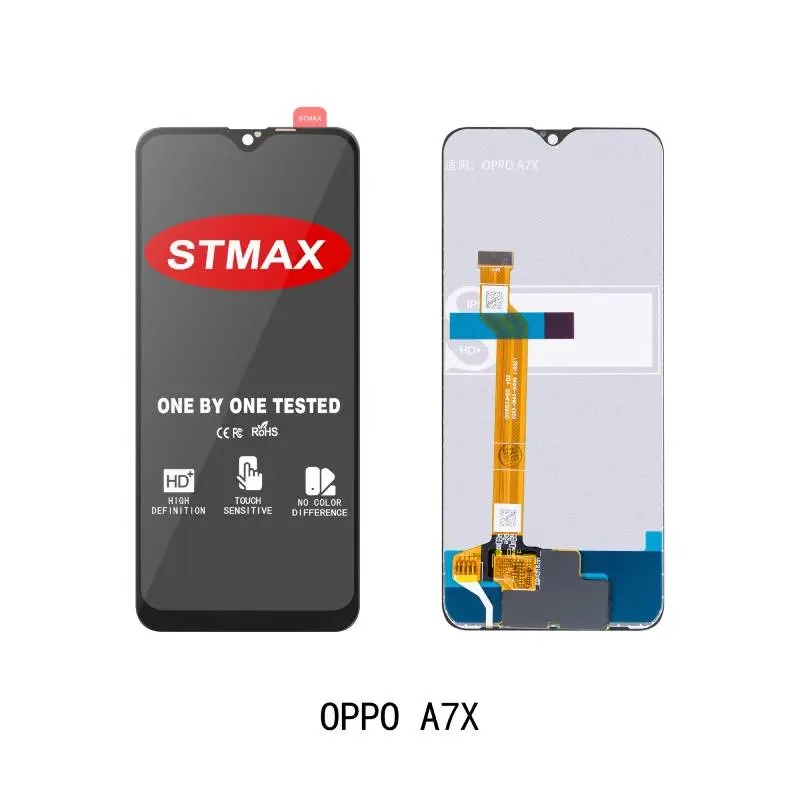
- LCD replacement screens: High-quality LCD assemblies for Huawei, OPPO, Vivo, Xiaomi, Redmi, and OnePlus models, tested for brightness, color accuracy, and touch performance.
- Touch screen assemblies: Pre-assembled LCD touch screen digitizer modules that simplify installation and reduce repair time. See our Redmi Note 12 LCD with touch digitizer assembly as an example.
- OLED solutions: AMOLED and OLED display assemblies for premium models that require original-level display quality. See our OPPO K12x OLED display assembly.
We cover all major brands including Huawei, OPPO, Vivo, Xiaomi, Redmi, and OnePlus, with continuous model updates to match the latest device releases. Our commitment to quality includes 100% pre-shipment testing, consistent model availability, and OEM/ODM customization services for brand partners. For more about our capabilities, read about high-precision LCD assembly for smart devices or visit our about page to learn more about STMAX.
Frequently Asked Questions
How do I verify a mobile phone replacement screen supplier's quality?
Request samples of your most-needed models and test them for dead pixels, touch accuracy, brightness, color consistency, and glass hardness. Ask the supplier about their testing protocols — a reliable supplier will describe 100% visual inspection, functional testing, and batch sampling for reliability. Also check whether they offer warranty coverage for defective units and what their defect rate threshold is.
What is the difference between OEM and aftermarket replacement screens?
OEM screens are manufactured to the same specifications as the original display, while aftermarket screens are produced by third-party manufacturers. Quality aftermarket screens from a reputable supplier like STMAX can closely match OEM performance at a lower cost. The key is choosing a supplier that maintains strict quality testing and uses high-grade components. Learn more in our guide to original LCD screens.
What is the typical minimum order quantity for wholesale screen purchases?
Minimum order quantities vary by supplier and model. Manufacturers like STMAX typically offer flexible MOQs for initial trial orders and volume-based pricing for larger orders. Contact the supplier directly with your model list and expected monthly volume to get accurate MOQ and pricing information.
How can I reduce procurement risk when sourcing replacement screens?
Start with a small sample order to verify quality before committing to volume purchases. Choose a supplier with 100% pre-shipment testing, clear warranty terms, and a track record of consistent quality. Work directly with a manufacturer rather than a trading company for better quality control and technical support. Diversify your model coverage with one reliable supplier to simplify logistics and quality management.
Can replacement screens be customized with my brand logo?
Yes. Manufacturers with OEM/ODM capabilities like STMAX can customize logo printing on screen assemblies, packaging, and protective film. Customization may also include retail packaging design, model labeling, and serial number tracking. Minimum order quantities for customized products are typically higher than for standard items.
Looking for a reliable mobile phone replacement screen supplier?
Contact STMAX for high-quality LCD replacement screens, touch assemblies, and OLED solutions with global shipping.
Contact Us View All ProductsSTMAX | Mobile Phone Replacement Screen Supplier | OEM/ODM Solutions