

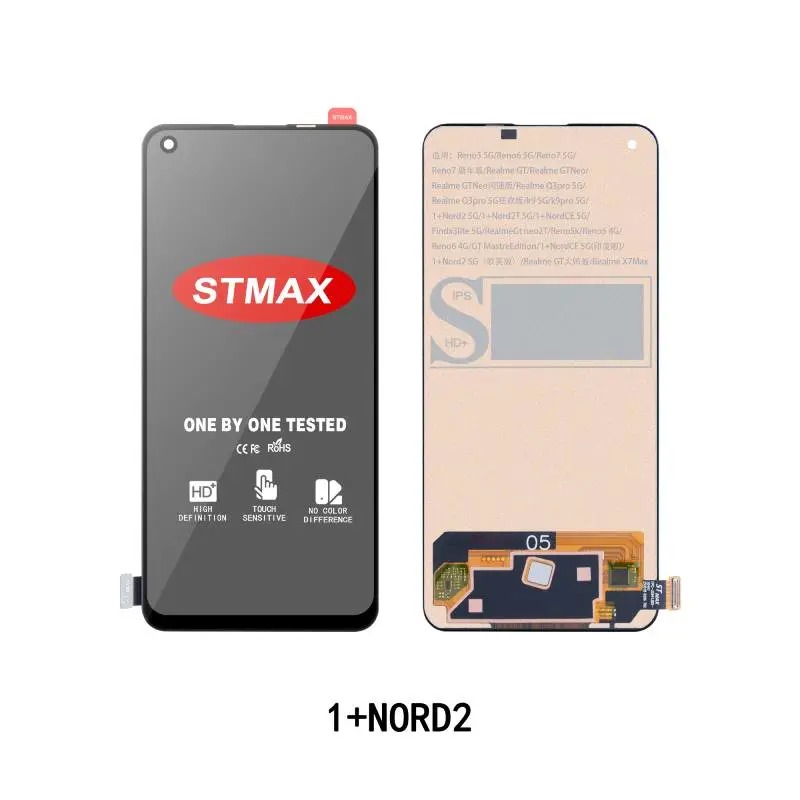
OEM vs Aftermarket Phone Screens: What Buyers Should Know
When purchasing smartphone replacement displays, buyers often need to decide between OEM and aftermarket phone screens. For distributors and repair businesses, this choice directly affects product quality, customer satisfaction, repair success rate, and business reputation. Understanding the differences between OEM and aftermarket screens helps buyers select the right products for their target markets. This guide explains the key differences between OEM and aftermarket phone screens and what wholesale buyers should consider before purchasing.
What Are OEM Phone Screens?
OEM (Original Equipment Manufacturer) phone screens typically refer to display components manufactured according to original device specifications. These screens are designed to match the original equipment in terms of dimensions, connector types, and performance standards. OEM LCD screen components are known for high compatibility and consistent performance, making them a preferred choice for premium repair services and high-end refurbishment businesses.
OEM replacement screens are commonly sought after by repair shops serving customers who expect original-level display quality. However, for wholesale distributors and large-volume buyers, OEM screens come with certain trade-offs — including higher costs and more limited availability compared to aftermarket alternatives.
Advantages of OEM Phone Screens
Better Compatibility: OEM screens are designed to fit precisely with original device frames and connectors, ensuring stable installation and reducing the risk of fitment issues during repairs. This is especially important for original LCD screen replacements in flagship models where tolerances are tight.
Consistent Display Performance: OEM screens typically deliver reliable color accuracy, brightness levels, and touch response that match the original device experience. This consistency is critical for repair businesses that prioritize customer satisfaction and low return rates.
Higher Customer Acceptance: End customers familiar with their device's original display quality are more likely to be satisfied with OEM-level replacements, particularly in premium repair and high-end refurbishment markets.
Limitations of OEM Phone Screens
For wholesale buyers and B2B distributors, OEM screens present several practical challenges. The higher unit cost reduces profit margins, especially for high-volume mobile phone display parts orders. Availability can be unpredictable, particularly for older or discontinued phone models. Additionally, the purchasing requirements for OEM components are often more restrictive, making them less flexible for distributors who need to serve diverse customer segments.
What Are Aftermarket Phone Screens?
Aftermarket replacement screens are produced by third-party display manufacturers specifically for the repair and replacement market. These screens are widely used by repair shops, wholesale distributors, and refurbishment companies around the world. Unlike OEM screens, aftermarket options come in varying quality grades — from basic replacements to premium-grade displays that rival original performance.
The aftermarket sector has grown significantly because it offers practical solutions for the mobile repair industry: competitive pricing, broader model coverage, and flexible supply options. For businesses that handle large volumes of LCD screen replacement work, aftermarket screens are often the go-to choice.
Advantages of Aftermarket Replacement Screens
Cost Efficiency: Aftermarket screens are significantly more affordable than OEM alternatives, making them ideal for wholesale purchasing and price-sensitive repair markets. This cost advantage allows distributors to offer competitive pricing while maintaining healthy margins — especially important when dealing with LCD screen wholesale orders.
Wide Product Availability: A reliable mobile phone screen supplier can cover a broad range of brands and models, including older devices that OEM channels no longer support. This breadth is essential for distributors who need to serve repair shops working on diverse smartphone models.
Flexible Supply Options: Aftermarket manufacturers can typically accommodate larger volume orders with shorter lead times, making it easier for distributors to maintain stock levels and respond to market demand fluctuations.
Considerations When Buying Aftermarket Screens
Not all aftermarket products offer the same quality. The key distinction lies in the manufacturer's experience, quality control processes, and commitment to consistency. Buyers should evaluate whether a supplier conducts thorough phone LCD screen testing — including display function checks, touch response verification, and appearance inspection — before shipment. A professional phone replacement screen supplier will have established QC workflows that ensure batch-to-batch consistency.
OEM vs Aftermarket Phone Screens: Key Differences
| Factor | OEM Screens | Aftermarket Screens |
|---|---|---|
| Manufacturing Source | Original manufacturer specifications | Third-party display manufacturer |
| Cost | Higher unit price | More affordable, better for bulk orders |
| Availability | Limited, especially for older models | Wider coverage across brands and models |
| Target Customers | Premium repair and high-end refurbishment | General repair market and wholesale distribution |
| Wholesale Suitability | Depends on budget and availability | Highly suitable for bulk purchasing |
Which Type of Screen Should Wholesale Buyers Choose?
The right choice depends on your target market and customer base. Different business models call for different sourcing strategies — and many successful distributors carry both product lines to maximize market coverage.
For Premium Repair Businesses
Repair shops serving customers who expect original-level display quality should consider OEM-grade products. These customers care most about display accuracy, touch responsiveness, and visual consistency — factors where OEM screens have a natural advantage. For smartphone display screen replacements in flagship devices, the quality difference is more noticeable and can directly impact customer reviews and repeat business.
For High-Volume Repair Markets
For repair chains and businesses that process large daily volumes, high-quality aftermarket screens are the practical choice. The combination of competitive pricing, stable supply, and better profit margins makes aftermarket screens the backbone of most wholesale mobile phone LCD screens operations. When sourced from a reliable manufacturer, aftermarket screens can deliver excellent performance at a fraction of the OEM cost.
For Distributors
Wholesale distributors benefit most from maintaining a balanced product portfolio. Stocking both premium and cost-effective replacement screen options allows you to serve diverse customer segments — from high-end refurbishment companies to budget-focused repair chains. A professional phone replacement screen supplier should be able to support this dual-product strategy with consistent quality across all product lines.
For more detailed guidance on product selection, refer to our LCD vs OLED replacement screens comparison, which covers technology-level differences between display types.
How to Evaluate the Quality of Aftermarket Phone Screens
Since aftermarket quality varies significantly between manufacturers, buyers need a systematic approach to evaluation. The following checks help ensure you are sourcing from a competent replacement screen supplier with proper quality controls.
Display Performance Testing
Every mobile display assembly should be checked for resolution accuracy, consistent brightness across the panel, color uniformity, and the absence of dead pixels or light spots. These are baseline quality indicators that directly affect the end-user experience and repair success rate.
Touch Function Testing
Touch sensitivity and multi-touch response are critical for smartphone usability. Aftermarket screens must be tested for accurate touch recognition, fast response times, and smooth multi-touch operation — especially for LCD touch screen assemblies where the digitizer is integrated with the display panel.
Compatibility Testing
Each screen must be verified for correct phone model matching, connector compatibility, and assembly fitting. Compatibility errors lead to installation failures, wasted inventory, and return costs. Professional suppliers should provide accurate specifications and compatibility documentation for every phone display part they ship.
Production Quality Control
A reliable mobile phone replacement screen supplier should have a multi-stage QC process that includes incoming material inspection, in-process production testing, and final outgoing inspection. This systematic approach ensures batch-to-batch consistency and minimizes defect rates — which is especially important for large-volume orders where even small defect percentages can translate into significant business impact.
Why Choosing the Right Replacement Screen Supplier Matters
Buyers should not make purchasing decisions based on price alone. The real cost of choosing the wrong supplier goes far beyond the initial purchase — it includes high return rates, repair failures that damage your reputation, and customer complaints that drive away repeat business. A professional mobile phone display manufacturer provides more than products: they deliver stable quality, consistent supply availability, and responsive technical support that protects your business over the long term.
When evaluating suppliers, look beyond the price sheet. Consider their manufacturing experience, quality control infrastructure, model coverage breadth, and ability to maintain consistent quality across large wholesale phone screens orders. These factors determine whether a supplier can be a reliable long-term partner — not just a one-time vendor.
Why STMAX Is a Reliable Mobile Display Supplier
STMAX provides professional LCD assembly and display solutions for global distributors, repair businesses, and refurbishment companies. Our product range includes LCD replacement screens, OLED touch screen assemblies, and complete smartphone display solutions designed for the wholesale and B2B repair market.
We support a broad portfolio of popular smartphone brands and models:
- Huawei — Mate series, Nova series replacement screens
- OPPO — Reno, A-series, Find X models
- Vivo — V-series, Y-series, S-series displays
- Xiaomi — Mi, Redmi Note series screens
- OnePlus — LCD and OLED display assemblies
- Redmi — Note series, K series replacement displays
Whether you need high-quality aftermarket replacement screens for volume distribution or premium-grade displays for specialized repair markets, STMAX offers reliable supply, consistent quality, and long-term cooperation for global buyers. Browse our complete product catalog to see the full range of available models and specifications.
Frequently Asked Questions
What is the difference between OEM and aftermarket phone screens?
OEM screens are associated with original manufacturing standards and specifications, while aftermarket screens are produced by third-party manufacturers specifically for the repair and replacement market. The key differences lie in cost, availability, and supply flexibility — with aftermarket screens generally offering better economics for wholesale purchasing and wider model coverage.
Are aftermarket phone screens good quality?
Aftermarket screen quality depends entirely on the manufacturer. Professional suppliers that use strict testing processes — including display function verification, touch response testing, and appearance inspection — can produce aftermarket screens with excellent and reliable performance. The key is choosing a supplier with proven manufacturing experience and systematic quality control rather than selecting based on price alone.
Which phone screens are better for wholesale purchasing?
Aftermarket screens are often preferred for wholesale purchasing because they offer competitive pricing, wider model availability, and more flexible supply options. These advantages make them well-suited for distributors, repair chains, and businesses that need to maintain inventory across multiple brands and models. However, some buyers may also carry select OEM products for premium customer segments.
How can buyers choose a reliable aftermarket screen supplier?
Buyers should evaluate a supplier's manufacturing experience, quality control processes, product compatibility documentation, testing standards, and after-sales support. Requesting samples for hands-on evaluation, reviewing the supplier's testing workflow, and checking their ability to maintain consistent quality across different batches are practical steps. A reliable supplier should be transparent about their QC procedures and responsive to technical inquiries.
Looking for a reliable aftermarket and replacement phone screen supplier?
STMAX provides quality LCD and OLED display solutions for global distributors, repair businesses, and refurbishment companies.
View Product Catalog Contact STMAX