

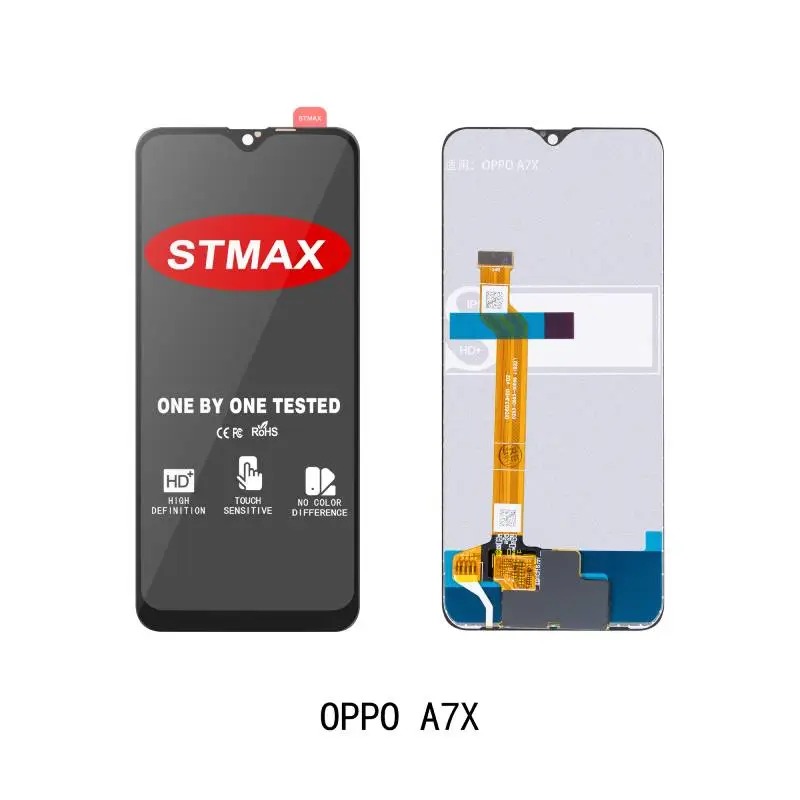
For phone repair businesses, replacement screens are one of the most important inventory items — accounting for a significant portion of daily operational expenses. However, many repair companies face persistent challenges: unstable screen quality leading to repair failures, high return rates from dissatisfied customers, delayed shipments that disrupt service schedules, and rising purchasing costs that squeeze profit margins.
These challenges do not only affect the bottom line — they also damage customer trust, reduce repeat business, and make it difficult to scale operations. The core issue is often not the price of the screens themselves, but the reliability of the supplier behind them. A reliable phone repair screen supplier can help businesses improve repair efficiency, reduce operating costs, and increase customer satisfaction — creating a more profitable and sustainable operation.
This article explains how choosing the right display supplier can help phone repair businesses build a more profitable operation, reduce hidden costs, and establish a stable supply chain that supports long-term growth.
Why Screen Supply Costs Affect Phone Repair Businesses
Screen supply is not just a purchasing line item — it is the foundation of a repair business's profitability. The cost, quality, and availability of replacement screens directly influence every aspect of operations, from daily workflow to customer satisfaction.
Replacement Screens Are a Major Business Expense
For most phone repair businesses, LCD screen replacement parts represent the single largest material cost. Whether working with LCD screens, OLED screens, or touch assemblies, the unit cost of each display directly affects repair pricing and overall profit margin. Even small differences in wholesale pricing — when multiplied across hundreds of repairs per month — can have a significant impact on annual profitability. This makes LCD screen wholesale pricing one of the most important factors in running a repair business.
For repair shops handling multiple smartphone brands, the cost challenge is compounded by the need to stock screens for diverse models — from Huawei and OPPO to Xiaomi and OnePlus devices. Each phone display part carries its own cost structure, and managing this complexity requires a supplier with broad model coverage and competitive pricing.
Poor Quality Screens Create Hidden Costs
Many repair businesses focus only on the upfront purchase price when selecting a mobile phone screen supplier. However, the real cost includes many hidden factors that emerge only after the product is in use. Low-quality screens lead to:
- Rework labor costs — technicians must redo failed repairs, consuming time that could have been used for billable work
- Customer complaints — dissatisfied customers may demand refunds, leave negative reviews, or switch to competitors
- Warranty repair expenses — each warranty return costs labor, replacement parts, and shipping — often exceeding the original profit margin
- Lost repeat business — customers who experience a failed repair are unlikely to return, reducing long-term revenue streams
The lesson is clear: the lowest purchase price does not always mean the lowest total cost. A slightly higher unit price from a reliable phone screen supplier often results in significantly lower overall operating costs when defect rates, rework, and warranty claims are factored in.
5 Ways a Reliable Screen Supplier Helps Reduce Costs
Partnering with the right supplier goes beyond getting a good price. A professional partnership delivers cost savings across the entire repair lifecycle — from purchasing to installation to after-sales support.
1. Lower Product Defect Rates
A reliable phone repair screen supplier invests in systematic quality control: display function testing to verify resolution, brightness, and color accuracy; touch response testing to ensure multi-touch capability and digitizer sensitivity; and appearance inspection to catch physical defects before shipment. These quality measures translate directly into fewer failed repairs and fewer customer returns for repair businesses.
Consider the math: if a repair shop installs 500 screens per month and the defect rate drops from 5% to 1% by switching suppliers, that means 20 fewer failed repairs monthly. At an average rework cost of labor plus replacement, the savings add up quickly — not to mention the improved customer satisfaction and reduced warranty handling time. For wholesale replacement screens buyers handling even larger volumes, the impact is proportionally greater.
2. Stable Wholesale Pricing
Long-term cooperation with a replacement screen supplier provides more than competitive pricing — it offers price stability that enables better business planning. Repair businesses that switch suppliers frequently in search of marginally lower prices often face inconsistent product quality, unpredictable availability, and fluctuating costs that disrupt their financial planning.
By establishing a stable supply relationship, businesses benefit from consistent pricing that allows them to set reliable repair prices for their customers and project profit margins with confidence. This stability is particularly important for repair chains and growing businesses that need to plan inventory purchases weeks or months in advance.
3. Reduce Inventory Problems
The phone repair industry requires maintaining inventory across a large number of phone models — each with different screen specifications. A reliable smartphone display supplier helps businesses manage this complexity by maintaining popular models in stock, providing multiple brand options, and supporting efficient replenishment cycles.
For repair shops serving diverse customers, a supplier with broad mobile display assembly coverage across brands is essential. The right supplier should support popular smartphone brands including:
- Huawei — Mate series, Nova series, and Honor models
- OPPO — Reno series, A-series, Find X models
- Vivo — V-series, Y-series, S-series devices
- Xiaomi — Mi series, Redmi Note series, Poco models
- Redmi — Note series, K series, and budget models
- OnePlus — Flagship and Nord series displays
This breadth of coverage allows businesses to consolidate purchasing with a single mobile phone repair parts supplier, reducing administrative overhead and simplifying inventory management.
4. Improve Repair Efficiency
High-quality replacement screens from a reliable supplier mean easier installation, better compatibility with device frames and connectors, and fewer issues during the repair process. Technicians spend less time troubleshooting fitment problems, reducing average repair time per device. A repair shop that cuts 5 minutes off each repair can serve more customers daily — and with labor costs being the second-largest expense after parts, this efficiency gain translates directly into higher profitability.
Consistent quality also means that repair workflows become more predictable. When technicians know that each screen from a trusted phone repair screen supplier will perform consistently, they can work with confidence — reducing the stress and wasted time associated with defective products.
5. Provide Technical and After-Sales Support
A professional phone repair parts supplier does more than ship products — they provide technical information, compatibility guidance, and responsive after-sales support that reduces the time and effort repair businesses spend on procurement communication. When compatibility issues arise with a specific phone model, a knowledgeable supplier can quickly provide the right solution, saving hours of back-and-forth communication.
This support is especially valuable for repair businesses that handle a wide range of phone models and need reliable technical information to serve their customers effectively. The cost of purchasing from a supplier without adequate support includes wasted technician time, incorrect orders, and customer delays — all of which chip away at profitability.
How to Choose a Cost-Effective Phone Repair Screen Supplier
Finding the right supplier requires looking beyond the price list. The most cost-effective partner is not necessarily the cheapest — it is the one that delivers the best overall value in terms of quality, reliability, and long-term support.
Evaluate Product Quality, Not Only Price
When comparing mobile phone display manufacturer options, the focus should shift from "cheapest supplier" to "best value supplier." The key metrics to evaluate include:
| Evaluation Factor | What to Check | Business Impact |
|---|---|---|
| Defect Rate | Sample testing, batch consistency | Directly affects rework costs and customer satisfaction |
| Product Consistency | Same model across different batches | Ensures predictable repair workflow and technician confidence |
| Customer Feedback | Reviews from other repair businesses | Provides real-world validation of supplier claims |
The cheapest quote often comes with hidden trade-offs that reveal themselves only after products are in use. A comprehensive evaluation — including sample orders and hands-on testing — provides the information needed to make an informed decision.
Check Product Range and Brand Coverage
An effective smartphone display supplier should cover multiple smartphone brands, various models within each brand (from flagship to budget), and both LCD and OLED products. Broad coverage means repair businesses can consolidate their purchasing with fewer suppliers — reducing the administrative burden of managing multiple vendor relationships and enabling volume-based pricing negotiations.
For repair chains and growing businesses, this consolidation is particularly valuable. Instead of coordinating with three or four different suppliers for different phone brands, a single supplier with comprehensive coverage simplifies procurement, standardizes quality expectations, and streamlines inventory management.
Consider Long-Term Supply Capability
A supplier's ability to maintain stable production, respond quickly to market changes, and provide continuous product availability is critical for phone repair business costs management. Suppliers with limited production capacity may struggle during peak demand periods, leading to stockouts that force repair businesses to turn away customers or purchase from unfamiliar sources at higher prices.
Long-term supply capability also includes the ability to support new phone models as they are released. The mobile phone market evolves rapidly, and repair businesses need a supplier that keeps pace — adding new LCD assembly models to their catalog as demand shifts toward newer devices.
Wholesale Replacement Screens: A Better Strategy for Growing Repair Businesses
For repair businesses looking to scale, shifting from per-order purchasing to wholesale replacement screens procurement is a strategic move that delivers multiple benefits. Bulk purchasing reduces the per-unit cost of each screen, improving profit margins on every repair. It also enables better inventory planning — businesses can maintain adequate stock levels for popular models, reducing the risk of turning away customers due to part shortages.
This strategy is particularly suited to repair chains with multiple locations, regional distributors serving networks of independent repair shops, and refurbishment companies processing large volumes of devices. With bulk phone screens purchasing, these businesses achieve economies of scale that make them more competitive in their local markets.
However, wholesale purchasing requires a reliable partner. Committing to larger order volumes with an unproven supplier creates significant risk — which is why building a relationship with a trusted phone repair parts wholesale supplier is essential before scaling up purchase quantities.
LCD and OLED Solutions for Different Repair Markets
Different repair markets have different display requirements, and a well-rounded phone repair screen supplier should support both LCD and OLED technologies to serve diverse customer needs.
LCD Replacement Screens
LCD LCD touch screen replacements are ideal for cost-sensitive repair markets and high-volume operations. LCD technology offers affordable pricing that makes it accessible for budget-conscious customers, and the manufacturing process is mature — resulting in stable supply availability. For repair shops serving price-sensitive markets or handling large volumes of mid-range smartphone models, LCD screens are often the most practical and profitable choice.
The widespread adoption of LCD technology across entry-level and mid-range smartphones means consistent demand from repair businesses worldwide. A supplier with strong LCD manufacturing capability ensures that repair shops always have access to the screens their customers need.
OLED Replacement Screens
OLED screen assembly products are better suited for premium smartphone repairs — particularly for flagship devices where customers expect an experience close to the original display. OLED technology delivers superior image quality with deeper blacks, more vibrant colors, and better contrast ratios. For repair shops serving customers with high-end devices, offering OLED replacement options can differentiate the business and justify higher repair prices.
However, OLED screens come at a higher unit cost and require more careful handling during installation. Repair businesses serving the premium segment should ensure their phone repair screen supplier has proven experience with OLED manufacturing and testing to minimize defect-related issues.
Why Choose STMAX as Your Phone Repair Screen Supplier
STMAX provides professional display solutions for global repair businesses, wholesale distributors, and refurbishment companies. Our product range includes mobile phone LCD replacement screens, OLED touch screen assemblies, and complete display replacement solutions designed for the B2B repair and wholesale market.
We support a comprehensive portfolio of popular smartphone brands and models:
- Huawei — Mate series, Nova series, and Honor replacement screens
- OPPO — Reno series, A-series, Find X series display assemblies
- Vivo — V-series, Y-series, S-series screen replacements
- Xiaomi — Mi series, Redmi Note series, Poco series displays
- Redmi — Note series, K series replacement screens
- OnePlus — LCD and OLED display assemblies for flagship and Nord series
Whether you need cost-effective aftermarket replacement screens for volume distribution or premium-grade displays for specialized repair markets, STMAX offers reliable supply, quality-focused manufacturing, and long-term B2B cooperation for global buyers. Our commitment to quality control and consistent supply helps repair businesses reduce operating costs, improve customer satisfaction, and build sustainable growth.
Browse our complete product catalog to explore the full range of available models and specifications, or contact us to discuss your bulk purchasing requirements.
Frequently Asked Questions
How can a phone repair business reduce screen replacement costs?
Phone repair businesses can reduce screen replacement costs by working with reliable suppliers that offer consistent quality and competitive pricing, purchasing screens in bulk to achieve lower per-unit costs, selecting suppliers with low defect rates to minimize rework expenses, and improving repair efficiency through technician training and quality tools. A holistic approach that considers both purchase price and operational costs delivers the best long-term results.
Why is supplier quality important for phone repair companies?
Supplier quality directly affects a repair company's profitability because poor-quality screens lead to higher rates of repair failure, increased customer returns and complaints, warranty handling costs, and damage to the business's reputation. Even a small defect rate — when multiplied across hundreds of monthly repairs — can represent a significant hidden cost that outweighs any upfront price savings from choosing a lower-quality supplier.
Should repair shops buy replacement screens wholesale?
Wholesale purchasing of replacement screens can significantly reduce per-unit costs and improve inventory availability for regular repair demand. This strategy is especially beneficial for repair shops with consistent daily repair volumes, repair chains operating multiple locations, and businesses looking to improve their competitive pricing. However, wholesale buying requires selecting a reliable supplier to minimize the risk of receiving large batches of inconsistent or defective products.
What should repair businesses look for in a screen supplier?
Repair businesses should evaluate a screen supplier based on multiple factors: quality control processes and defect rate data, product compatibility across different phone brands and models, competitive and stable pricing, supply reliability and inventory availability, and responsive after-sales technical support. The most important factor is consistency — a supplier that can deliver the same quality level across every batch provides the predictability that repair businesses need to operate efficiently.
Looking for a reliable phone repair screen supplier?
STMAX provides quality LCD and OLED replacement screens for repair businesses, distributors, and global wholesale buyers.
View Products Contact STMAX